

Safe Sleep from September: More Than a New Requirement. What Will It Really Mean for Early Years?
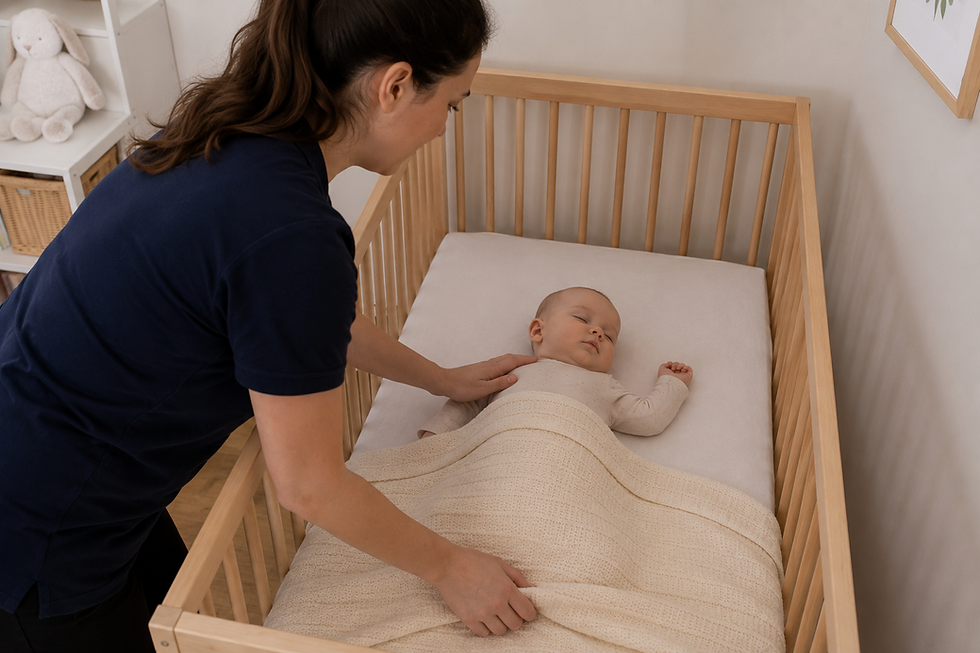
There are moments in every nursery day that feel almost magical. A busy baby room gradually falls quiet, the lights are dimmed, comforting routines begin and practitioners gently settle babies ready for their nap. It is often the calmest part of the day, yet it is also one of the most significant. Every time a baby is placed down to sleep, parents are placing enormous trust in the professionals caring for their child. They trust that their baby will not only be comforted and cared for, but that every possible step has been taken to keep them safe.
From September, safer sleep requirements become much more explicit within the Early Years Foundation Stage, often referred to as the EYFS. While many providers will quite rightly say, "We've always followed safer sleep guidance," these changes represent much more than an update to policy. They reinforce that safe sleep is a safeguarding priority and make expectations clearer for providers, inspectors and parents alike.
On the face of it, this can only be a positive step. Few people working in early years would argue against strengthening practices that help keep babies safe. However, as with many changes introduced into our sector, the principle is relatively straightforward, but the practicalities are much more complex. The real conversation is not simply about complying with new requirements. It is about how settings implement them within environments that are already facing significant financial, staffing and capacity pressures.
Why are these changes happening?
The strengthened guidance has not appeared in isolation. It follows renewed attention on safer sleep after several tragic incidents involving babies in childcare settings, including the death of Genevieve Meehan, whose family have campaigned tirelessly for stronger protections in early years. Their work has highlighted the importance of ensuring that all providers follow evidence-based safer sleep practices consistently, regardless of where a baby is cared for.
At the heart of the updated requirements is a simple principle. Babies deserve the same level of protection when they sleep in nursery as they do at home.
The evidence supporting safer sleep is extensive. Since the introduction of the Back to Sleep campaign during the 1990s, rates of Sudden Infant Death Syndrome, commonly known as SIDS, have fallen dramatically. Decades of international research have consistently demonstrated that placing babies on their backs to sleep, providing a firm and flat sleep surface, avoiding loose bedding and keeping the sleep environment clear significantly reduces the risk of sudden infant death. Organisations such as The Lullaby Trust continue to promote these recommendations because the evidence remains strong and consistent.
In many respects, the updated EYFS is not introducing entirely new ideas. Instead, it is placing greater emphasis on practices that have long been recognised as the safest way for babies to sleep.
So, what actually changes?
The updated requirements make expectations much clearer. Babies under one year of age should sleep in a cot with a firm, flat mattress and should always be placed on their backs. The sleeping environment should be free from pillows, cot bumpers, soft toys, nests and loose bedding that could increase the risk of suffocation or overheating. Babies should be supervised appropriately, with regular sleep checks carried out and practitioners remaining able to see or hear sleeping children at all times.
Many settings will read these expectations and feel reassured because they already reflect current practice. Policies may need refreshing, staff training updated and risk assessments reviewed, but the day-to-day routines themselves may change very little.
For other providers, however, the guidance raises some important operational questions that cannot be ignored.
The conversation everyone seems to be having
If you have attended networking meetings, local authority briefings or simply chatted with other nursery managers recently, one question seems to arise more than any other.
Do we have enough cots?
At first glance, this appears to be an easy problem to solve. If babies under one should sleep in cots, surely settings can simply buy more. Unfortunately, it is rarely that simple.
Many nurseries have adapted their environments over many years. Some introduced floor beds for older babies who were becoming more mobile. Others developed flexible sleep arrangements that reflected children's individual routines and worked well within the physical space available. Many baby rooms, particularly those operating from older buildings, simply do not have unlimited space.
Buying additional cots is only one part of the equation. Managers also need to consider where those cots will go, whether practitioners can move around them safely, whether emergency evacuation routes remain accessible and whether the overall learning environment continues to meet children's needs. These are genuine operational challenges rather than excuses for not complying.
Could these changes affect baby places?
This is perhaps the question that many providers are quietly asking but fewer are openly discussing.
If a nursery currently offers eight places for babies under one but only has space for six compliant cots, difficult decisions may have to be made. Some providers may be able to redesign their baby rooms or invest in building alterations. Others may simply reach the point where there is no safe way to accommodate additional cots without compromising the environment.
In those circumstances, reducing the number of baby places may become the safest option.
That possibility raises wider questions for the sector. Families across many parts of the country already struggle to find childcare for babies. Waiting lists continue to grow, recruitment remains difficult and providers are balancing rising costs against funding that often fails to reflect the true cost of delivering high-quality care.
If the practical impact of the new safer sleep requirements is that some settings reduce the number of baby places available, this could place further pressure on childcare sufficiency. That does not mean the guidance is wrong. It simply reminds us that safeguarding improvements can sometimes have unintended consequences that also need careful consideration.
Safety and sustainability should never compete
It is important that conversations around these changes remain balanced.
Supporting safer sleep does not mean ignoring the practical challenges providers face every day. Equally, recognising those challenges does not mean questioning the importance of protecting babies. Both conversations are equally valid.
As a sector, we should welcome clearer expectations that strengthen safeguarding and reduce ambiguity. At the same time, we should ask whether providers are receiving the support they need to implement those expectations successfully.
Will funding be available to help settings purchase additional equipment?
Will smaller providers receive practical guidance on adapting limited spaces?
Will local authorities recognise the pressures these changes may create for baby provision?
These are not criticisms of the updated requirements. They are sensible questions that deserve thoughtful discussion.
It is about far more than buying new equipment
One of the risks whenever statutory guidance changes is that attention becomes focused on equipment rather than practice. Buying another cot may be relatively straightforward if the funding is available. Creating a culture where every practitioner understands why safer sleep matters is much harder and ultimately much more important.
Safe sleep depends upon knowledgeable staff who understand the evidence, recognise potential risks, communicate confidently with parents and feel able to challenge unsafe practice where necessary. It depends upon strong leadership, meaningful training and a culture where safeguarding is embedded in everyday decision making rather than simply documented within policies. Policies do not keep babies safe. People do.
Working in partnership with parents
The updated guidance is also likely to prompt more conversations with families. Some babies may sleep differently at home. Parents may choose routines or sleep arrangements that cannot safely be replicated within a nursery environment. These conversations require empathy and sensitivity.
The aim is not to criticise parenting choices but to explain why group childcare settings must follow consistent, evidence-based approaches that reduce risk for every baby in their care. Most parents simply want reassurance that their child is safe. Honest conversations, supported by clear explanations of the evidence, help build trust and strengthen partnerships.
Looking ahead
By September, many nurseries will have updated their policies, completed staff training, reviewed their sleep procedures and perhaps assembled more than a few new cots. For some settings, these changes will feel relatively minor. For others, they may require significant adjustments to environments, staffing or capacity.
What matters most is that the conversation remains thoughtful rather than reactive.
Safer sleep is not an unnecessary burden placed upon providers. It is a vital safeguarding responsibility supported by decades of research and driven by the shared ambition to protect babies from preventable harm. At the same time, acknowledging the practical implications does not weaken that ambition. Honest conversations about funding, space, staffing and capacity help ensure that guidance can be implemented effectively rather than simply complied with on paper. Perhaps that is the real message behind these changes.
This is not simply about buying more cots.
It is not simply about updating a policy or preparing for an inspection.
It is about ensuring that every baby, regardless of where they sleep, is cared for in the safest environment possible. Achieving that requires evidence, professional judgement, well-trained practitioners and settings that are properly supported to meet the expectations placed upon them.
Safe sleep has always been part of high-quality early years practice. From September, it becomes even more visible within the statutory framework. The challenge for all of us is to ensure these strengthened expectations improve outcomes for babies while recognising the realities of delivering outstanding childcare in an increasingly challenging landscape.
If we can achieve both, these changes will represent far more than a policy update. They will become another important step towards strengthening confidence in early years, supporting families and, most importantly, keeping babies safe.
Comments